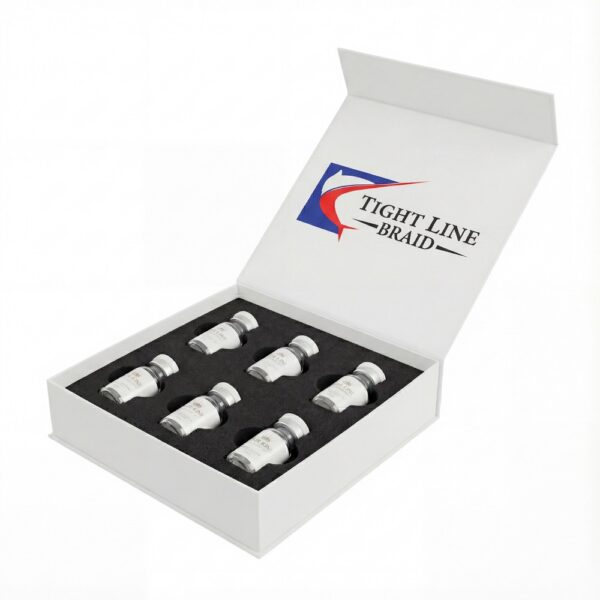
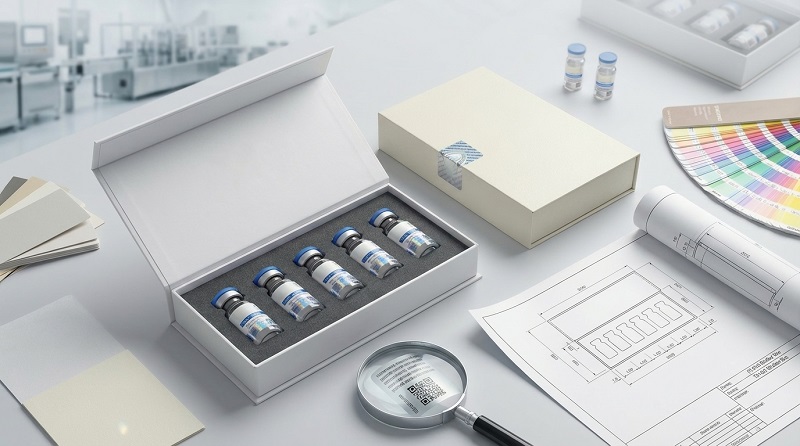
Peptides vials have become increasingly common across research, pharmaceutical, and health-related markets. As demand grows, buyers are paying closer attention not only to the vial itself, but also to the packaging that protects, presents, and supports the product throughout its lifecycle.
Choosing the right peptides vial packaging is not simply about selecting a box. It involves decisions about protection, materials, structure, printing, and long-term brand consistency. This practical buyer’s guide explains how to evaluate packaging solutions for peptides vials in a clear, straightforward way—especially for brands and distributors sourcing custom packaging for the first time.
Why Packaging Matters for Peptides Vials
Peptides vials are typically small glass containers that require careful handling. During storage, transportation, and end use, improper packaging can result in breakage, contamination risks, or poor customer perception.
Effective peptides vial packaging helps to:
- Protect fragile glass vials from impact
- Keep vials securely positioned during shipping
- Organize single or multiple vials efficiently
- Present clear product identification and branding
- Build trust in professional and regulated markets
For many buyers, packaging is also a signal of quality. Well-structured, professionally printed packaging reinforces credibility before the vial is ever opened.
Key Components of Peptides Vial Packaging
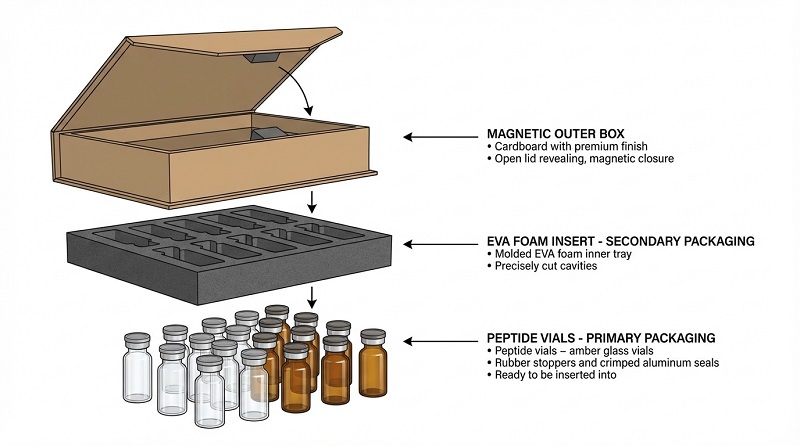
A complete packaging solution for peptides vials usually consists of multiple layers. Each layer serves a specific purpose.
Primary Packaging: The Vial
Although vials are often sourced separately, packaging design must be based on precise vial dimensions.
Common vial characteristics include:
- Glass construction (clear or amber)
- Small volumes such as 2ml, 5ml, or 10ml
- Rubber stoppers with aluminum seals
Packaging must hold the vial firmly without applying pressure, ensuring stability without risk of damage.
Secondary Packaging: Inner Inserts and Trays
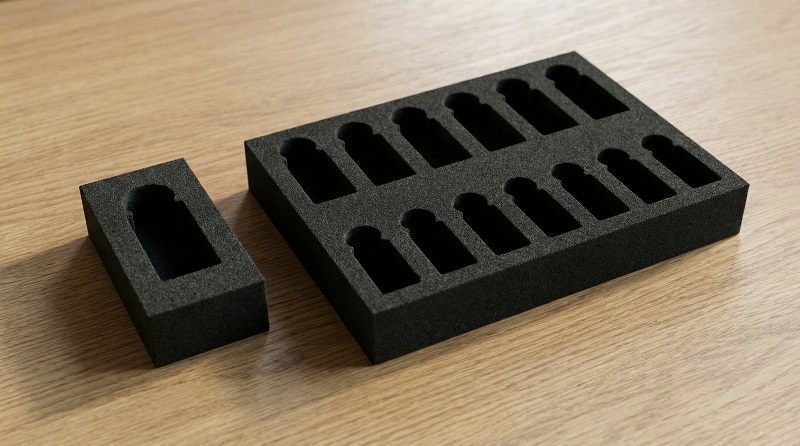
Inner packaging is critical for vial protection.
Common insert options include:
- Die-cut paperboard inserts
- Folded cardboard trays
- Foam or EVA inserts for premium packaging
A well-designed insert prevents movement, absorbs minor shocks, and improves the overall unboxing experience.
Choosing the Right Box Style for Peptides Vials
The outer box is the most visible part of peptides vial packaging and the primary area for branding and customization
Common Box Types Used for Peptides Vial Packaging
| Box Type | Key Features | Typical Use |
| Folding Carton Box | Lightweight, cost-effective, fully printable | Bulk distribution, standard orders |
| Rigid Box | Strong structure, premium appearance | High-end or branded products |
| Drawer Box | Organized layout, easy access | Multi-vial packaging sets |
| Magnetic Closure Box | Durable, reusable, luxury feel | Brand-focused presentations |

For most applications, custom printed folding carton boxes offer the best balance between protection, cost control, and design flexibility.
Material Selection for Vial Packaging
Material choice directly affects both durability and visual quality.
Common materials include:
- White paperboard (300–400 gsm)
- Coated paperboard for high-quality printing
- Kraft paperboard for an eco-friendly look
- Greyboard laminated with printed paper for rigid boxes
The goal is not to use the thickest material, but to select the right material for the vial weight, shipping distance, and market positioning.
Printing and Branding on Peptides Vial Packaging
Printing is a functional part of pharmaceutical-style packaging, not just decoration.
Information Commonly Printed on Vial Packaging
- Product name
- Vial quantity and size
- Storage or handling notes
- Company logo and brand identity
Clear layout, readable fonts, and restrained design are especially important for peptides vial packaging.
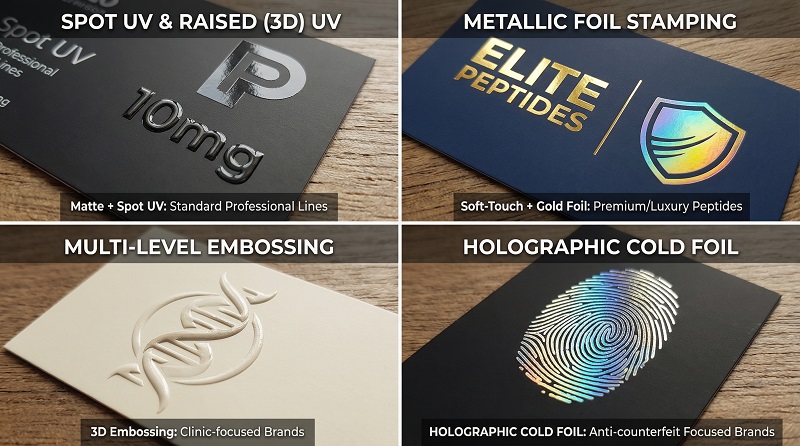
Popular Printing and Finishing Options
| Technique | Purpose |
| Offset Printing | Consistent, high-quality results |
| CMYK Printing | Full-color branding |
| Foil Stamping | Logo or brand emphasis |
| Spot UV | Subtle design highlights |
Size Accuracy and Packaging Fit
Because peptides vials are small, packaging tolerances matter. Even minor size deviations can affect protection and usability.
Good vial packaging should:
- Secure the vial without compression
- Prevent internal movement
- Allow easy insertion and removal
Confirming internal dimensions is essential when developing custom peptides vial packaging.
Single Vial vs. Multi-Vial Packaging Solutions
Packaging requirements vary depending on how peptides vials are sold and distributed.
Single Vial Packaging
- Compact box size
- Lower material usage
- Suitable for sampling or individual sales
Multi-Vial Packaging
- Structured inserts with fixed slots
- Clear organization
- Better presentation for sets
Packaging for Shipping and Logistics
Peptides vial packaging must perform under real shipping conditions.
Key considerations include:
- Drop resistance
- Stack pressure
- Long-distance transportation vibration
Often, improving insert design provides better protection than simply increasing box thickness.
Compliance, Safety, and Market Expectations
Even when regulatory labeling is minimal, buyers expect peptides vial packaging to look professional and compliant.
Good packaging design avoids:
- Overstated claims
- Confusing layouts
- Inconsistent branding
Neutral, clean packaging builds confidence across research, laboratory, and pharmaceutical-related markets.
Customization Details That Add Value
Small design features can significantly improve usability:
- Finger cut-outs for easy vial removal
- Matte lamination to reduce glare
- Numbered vial positions
- QR codes linking to documentation
These elements enhance user experience without adding excessive cost.
Cost vs. Value in Peptides Vial Packaging
Price should be evaluated alongside performance and consistency.
Well-designed packaging can:
- Reduce breakage
- Lower complaint rates
- Improve brand perception
- Support repeat orders
The most effective peptides vial packaging solutions focus on long-term value, not just unit price.
Conclusion: Making an Informed Packaging Choice
Choosing the right packaging for peptides vials requires a practical, detail-oriented approach. By focusing on protection, fit, materials, and clear branding, buyers can create packaging that supports product quality and brand growth.
Thoughtful peptides vial packaging does not rely on complexity. It is designed to protect, organize, and present vials with precision and purpose.